
A missing tooth can change the feel of an ordinary day in small, relentless ways. Cold air catches in the gap. Chewing shifts to one side. Smiling in a bright restaurant or speaking in a work meeting can suddenly feel more exposed than it should.
That is part of why the cost of dental implants carries so much weight. Most people are not comparing numbers in a vacuum. They are trying to understand what it takes to feel steady again, to eat without overthinking, and to choose something that lasts.
Implants are often presented as if they were a single product with a single price, but that is not how treatment works in real life. The total cost can vary because implant treatment is usually a process, not one appointment. If timing matters for your schedule, ask for a clear implant process timeline. The condition of the bone, the health of the gums, the location of the missing tooth, the materials used, and whether extra procedures are needed all shape the final estimate.
One of the most useful questions is not, "Why is one office cheaper than another?" It is, "What is actually included, and what clinical problems are being solved?" That shift matters because a lower quote may leave out important steps, while a higher quote may reflect more careful planning, stronger materials, or treatment for bone loss that could otherwise compromise the result.
Patients exploring the cost of dental implants often want clear answers before making a long-term decision. At Smile Line Dentistry, individuals can receive personalized implant evaluations and detailed treatment recommendations based on their oral health, goals, and restorative needs.
Dental implant treatment usually includes several separate parts. A quote may bundle them together, or it may list them one by one. Either way, understanding the pieces makes the numbers less opaque.
In many cases, the total fee may include:
The phrase implant, abutment, and crown is worth noticing when you review an estimate. Some offices quote only the surgical implant itself, which can make the initial number look lower than the true total.
This is one reason patients can feel blindsided. The first number may sound manageable, then the rest appears in stages. A clear treatment plan should explain what is included now, what may be needed later, and which costs depend on healing or anatomy.
Two people can both need one implant and still receive very different estimates. That difference is not always about profit or branding. Often, it reflects anatomy, risk, and the amount of work needed to create a stable result.
When a tooth has been missing for a while, the jawbone in that area often shrinks. This is called bone resorption, meaning the body gradually removes bone that is no longer being stimulated by a tooth root. After an extraction, bone loss can begin earlier than many patients realize. If the bone becomes too narrow or too short, a graft may be needed before or during implant placement.
Gum health matters too. If there is active periodontal disease, meaning infection and inflammation in the tissues that support the teeth, treatment may be needed before an implant is placed. An implant placed into an unhealthy environment has a higher risk of complications.
Front teeth often demand more cosmetic precision. The shape of the gums, the thickness of the bone, and the way the final crown catches the light all matter more in the smile zone. Many patients want to visualize what implants look like before deciding.
Back teeth usually carry heavier chewing forces, so strength and bite design become central.
Replacing a lower molar is not the same as replacing an upper front tooth. In the upper back jaw, the sinus may limit available bone height, and some patients need a sinus lift to create enough support. That adds surgical complexity and cost.
Not all implant systems are identical. Different manufacturers have different research histories, surface designs, component options, and restorative workflows. The crown material also matters. A custom ceramic crown designed for a visible front tooth may cost more than a simpler restoration in a less visible area.
Digital planning, surgical guides, and 3D imaging can also affect the fee. These tools may increase upfront cost, but they can improve implant accuracy, especially in anatomically tight spaces or cosmetic cases. In many situations, that added precision is worth the investment because it can reduce guesswork and support a more predictable result.
An implant may be placed by a general dentist with implant training or by a specialist such as an oral surgeon, periodontist, or prosthodontist. Fees can differ based on training, case complexity, and whether multiple clinicians are involved.
Location matters as well. A practice in a major city center, a high-cost suburb, or a region with higher lab and staffing expenses may charge more than an office in a smaller community. That does not automatically mean better or worse care. It simply reflects the economics around the treatment.
There is no single national fee that applies everywhere, and offices structure estimates differently. Still, some broad patterns are common enough to help with planning.
| Treatment Situation | What It Often Includes | General Cost Pattern |
| Single implant in a healthy site | Implant post, abutment, crown, routine imaging | Often the most straightforward pricing |
| Single implant with bone grafting | Implant plus grafting and added follow-up | Usually higher than a simple single-tooth case |
| Front tooth implant | Cosmetic planning, custom shaping, visible-zone crown | May cost more because esthetics are demanding |
| Multiple implants | Several implant posts with separate restorations | Total cost rises, but per-tooth cost may vary |
| Implant-supported bridge or denture | Fewer implants supporting several teeth | Can be more cost-efficient than replacing each tooth individually |
| Full-arch implant treatment | Extensive planning, surgery, provisional teeth, final prosthesis | Usually the highest overall investment |
The phrase full cost estimate in writing matters here. It is reasonable to ask whether the quote covers imaging, sedation if needed, temporary teeth, grafting, the final restoration, and post-treatment visits.
If an office cannot explain the estimate clearly, that is not a small issue. Implant treatment should feel deliberate and transparent from the beginning.
Dental insurance coverage for implants varies widely. Some plans exclude implants entirely, some cover only parts of the treatment, and some may contribute to the crown but not the surgical phase. Medical insurance may occasionally help when tooth loss is related to trauma, pathology, or major reconstructive needs, but that is not the norm.
It is worth asking for a pre-treatment estimate from the office and, if possible, a written breakdown of likely insurance contributions. Patients should also ask whether benefits apply differently to extractions, grafting, imaging, or the final prosthetic tooth.
A common frustration is learning that insurance will help pay for a removable partial denture but not for an implant that may function more like a natural tooth. That can feel backward. Still, it reflects plan design, not necessarily what is clinically best for a specific mouth.
If finances are tight, ask about phased treatment, financing options, or whether a temporary solution is reasonable while planning for an implant later. That is not ideal in every case, but it can be part of a realistic path forward.
Implant pricing can trigger the same reflex as any large purchase. People compare numbers, look for deals, and worry about overpaying. That is understandable, but dentistry is not retail in the usual sense.
A very low quote may leave out diagnostics, grafting, custom lab work, or the final crown. In some cases, it may reflect a one-size-fits-all approach in a situation that actually needs careful planning. On the other hand, a high fee does not automatically guarantee skill, long-term success, or better communication.
The better comparison is value. Ask what records are taken, what implant system is used, who performs each step, how complications are handled, and what happens if the site does not heal as expected. A thoughtful office should be able to answer these questions without defensiveness.
One of the most important things to compare is experience with cases like yours. A front tooth in a thin-gum smile line is different from a back tooth in dense bone. The right clinician for one may not be the ideal fit for the other.
An implant is often an excellent option, but it is not the only one. Depending on the location of the missing tooth, the condition of nearby teeth, medical history, and budget, another treatment may be more practical.
A bridge fills the gap by attaching a replacement tooth to neighboring teeth. It may cost less upfront than an implant and can often be completed more quickly. The tradeoff is that the adjacent teeth usually need to be reshaped, and the bridge does not stimulate the jawbone the way an implant does. Learn more about options for bridges on our bridges & crowns page.
A removable partial denture is usually the most affordable replacement for one or several missing teeth. Learn more about removable dentures. It can restore appearance and some chewing function, but it may feel bulkier, move during eating, or place pressure on the gums and remaining teeth.
Sometimes people delay treatment because the missing tooth is not visible or does not hurt. That is understandable, but over time the nearby teeth may drift, the opposing tooth may over-erupt, and bone loss may continue. Those changes can make later treatment more complicated.
The best choice is not always the most advanced one. It is the option that fits the mouth, the goals, the timeline, and the ability to maintain it.
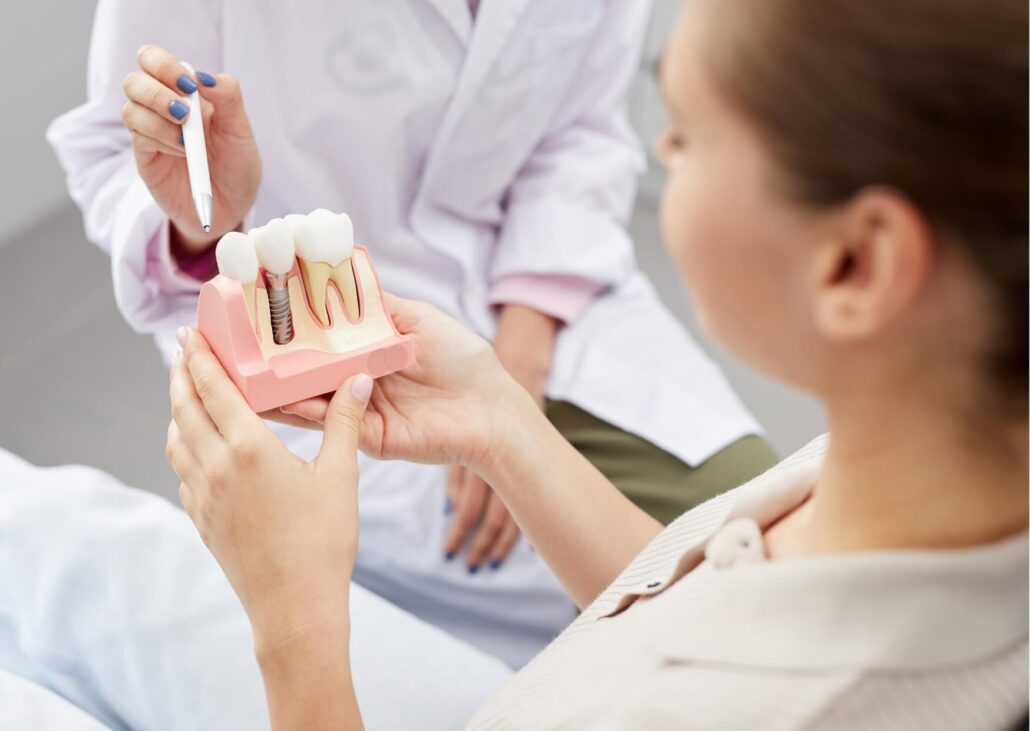
A good implant consultation should leave fewer unknowns, not more. It should also feel like a conversation, not a sales pitch.
Consider asking:
If the answers feel rushed or vague, it is reasonable to seek a second opinion. For a treatment with this level of cost and permanence, clarity is part of quality.
Choosing dental implants is an investment in your comfort, confidence, and long-term oral health. Whether you are replacing a single missing tooth or exploring full-mouth restoration options, understanding the cost of dental implants starts with a detailed evaluation and a treatment plan designed around your needs.
At Smile Line Dentistry in Livermore, CA, our team provides personalized implant consultations, clear treatment recommendations, and guidance every step of the way. Call (925) 456-7600 today to schedule your consultation and learn more about your options for restoring your smile.
We welcome patients from San Ramon and nearby communities and will explain financing and realistic timelines.
It varies by region and by the details of the case. A single implant may cost much more once imaging, the abutment, the crown, and any grafting are included, so ask for the full treatment total rather than the surgical fee alone.
Some offices separate the surgical phase from the restorative phase. That means the implant post may be one fee, while the abutment and crown are billed separately.
For many patients, yes, especially when long-term function, comfort, and bone preservation matter. But value depends on oral health, goals, budget, and whether another option may reasonably meet the same need.
Sometimes, but often only in part. Many plans have exclusions or cover only certain phases of treatment, so it is important to verify benefits before starting.
Not always. A lower price may be appropriate in a simple case, but it can also reflect missing steps or limited planning. The safer approach is to compare what is included and how the treatment is being designed.
Implants can last many years and often show strong long-term survival, but no treatment lasts forever in every patient. Success depends on bone support, gum health, bite forces, smoking status, home care, and regular dental follow-up. For more detail, see how long implants last.
Selected services and links are provided for general information and to help you prepare questions for your appointment. This article is educational and not a substitute for a clinical exam.
We are proud to provide our patients with the best in dental technology, treatment options and patient comfort. It is our pleasure to address all your questions and concerns.
