
A small gap in a child’s mouth can matter more than it looks. If a baby tooth is lost too early, nearby teeth can start to drift, the bite can change, and the adult tooth may lose the space it needs.
For many parents, hearing that their child may need a dental spacer brings both relief and worry. Relief, because there is a way to protect that space. Worry, because any dental appliance can sound more intimidating than it usually is.
A dental spacer for kids, also called a space maintainer, is not cosmetic. It is a practical appliance used to hold space open after a baby tooth is lost before the permanent tooth is ready to come in.
Smile Line Dentistry offers pediatric dentistry in Livermore and provides child-focused exams and space evaluations many parents look for.
Baby teeth do more than help with chewing and speech. They also guide permanent teeth into place as the jaws grow.
If a baby tooth is lost early because of decay, infection, trauma, or extraction, the teeth next to that space may begin to shift. That can reduce the room available for the permanent tooth underneath.
Prompt care such as dental fillings and regular preventive cleanings can lower the chance of early tooth loss. If you are worried about decay, it can help to know the signs of a cavity.
Many cavities can be treated early with tooth-colored composite fillings. In some cases, though, a baby tooth still needs to be removed with tooth extractions, and that is when a spacer may become important.
Its job is simple: hold the space open until the adult tooth is ready to erupt, or come through the gums. Not every missing baby tooth needs one, and the decision depends on the child’s age, the tooth involved, and how soon the permanent tooth is expected.
A dental spacer, often called a space maintainer, is a small device placed by a dentist or pediatric dentistry specialist to preserve room in the dental arch. The dental arch is the curved row of teeth in the upper or lower jaw.
Some spacers are fixed and attached to a tooth with a metal band or wire. Others are removable, though fixed appliances are often easier for younger children because they do not rely as much on daily cooperation.
The design depends on where the tooth was lost and how many teeth are involved. In most cases, the appliance is much smaller and less dramatic than parents expect.
These are often used when one baby molar is lost early. A metal band may fit around a nearby tooth, with a wire extending across the gap to keep other teeth from drifting.
If space needs to be maintained on both sides of the same arch, a wider appliance may connect across the mouth. This is more common when several teeth are missing or support is needed in more than one area.
These look more like a retainer and may be used in selected cases. They can work well for older children, but only if the appliance is worn consistently and handled carefully.
The best spacer is not the most advanced-looking one. It is the one that safely fits the child’s bite, stage of development, and ability to tolerate the appliance.
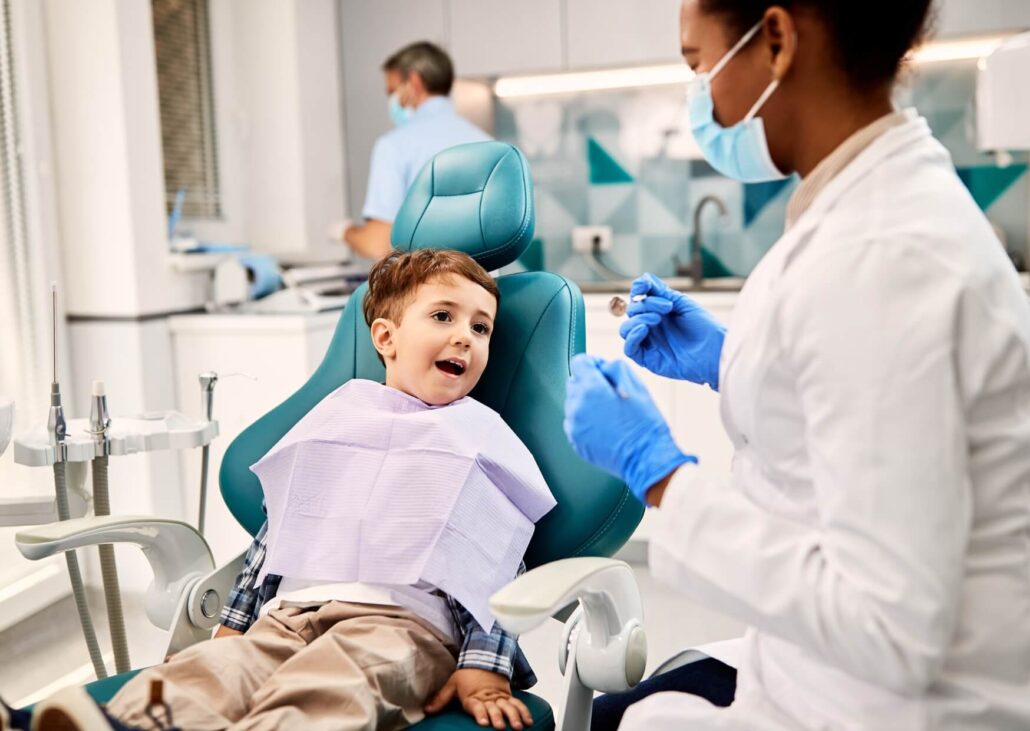
The appointment is usually straightforward. The dentist examines the area, may take dental X-rays to check the developing permanent tooth, and then selects or customizes the spacer.
When a fixed spacer is placed, a child may feel pressure or tightness at first. That usually settles within a few days as the mouth adjusts.
Food may catch around the appliance more easily. Speech can also sound slightly different for a short time, especially with larger spacers, but most children adapt quickly.
Mild awareness is common. Sharp pain, swelling, bleeding, or a loose appliance are not typical and should prompt a call to the dental office.
Living with a spacer is often easier than parents expect, but it does take some care. Sticky foods, hard candy, chewing ice, and very tough snacks can loosen or bend the appliance.
Cleaning matters because plaque can build up around bands and wires. Plaque is the soft bacterial film on teeth that can lead to gum irritation and decay.
Children often need extra help brushing around the spacer, especially at first. A calm routine usually works better than repeated reminders, and regular follow-up visits help keep the appliance safe and effective.
Published reviews on space maintainer complications note that plaque buildup and gum irritation are among the reasons follow-up matters. Other preventive steps, like teeth sealants, can also reduce the risk of cavities that lead to early tooth loss.
If the spacer is removable, it should be handled exactly as the dentist instructs. General online advice should never replace the care plan for that specific appliance.
Most spacers do their job quietly. Still, they can become loose, break, rub the gums, trap food, or stop fitting well as the mouth changes.
A loose spacer matters more than many parents realize. If it shifts out of place, it may stop protecting the space and can irritate soft tissue or even become a choking risk if it comes free.
Call a dentist promptly if your child has worsening pain, swollen gums, trouble chewing, a bent wire, a band lifting off the tooth, or an appliance that seems to move. If a piece comes out completely, keep it if possible and contact the office.
Urgent evaluation is especially important if there is facial swelling, fever, pus, trouble swallowing, or significant pain. Those signs may point to infection or another problem that needs timely care.
This is one of the most common questions, and the honest answer is not always. A spacer can preserve room for a permanent tooth, but it does not guarantee that a child will never need orthodontic treatment.
Teeth and jaws develop under the influence of many factors, including genetics, growth patterns, oral habits, and the timing of tooth eruption. Even with good space maintenance, crowding or bite problems can still happen.
That said, a spacer can help prevent one avoidable problem: loss of needed space after an early baby tooth is lost. Evidence on space maintainer effectiveness supports this more realistic expectation.
The decision is based on timing and anatomy, not just the fact that a tooth is missing. Dentists look at the child’s age, the location of the lost tooth, the amount of space already present, and how close the permanent tooth is to erupting.
X-rays are often helpful because they show whether the adult tooth is developing normally and how much bone and gum tissue remain above it. If the permanent tooth is expected soon, a spacer may not be necessary.
This is why two children with what looks like the same missing tooth may get different recommendations. Guidance on space maintainer timing helps explain why good pediatric dental care is specific, not one-size-fits-all.
If your child has lost a baby tooth early and you are not sure what comes next, a pediatric dentistry exam can help bring the situation into focus. Sometimes a very small appliance protects years of growth still to come.
If your child may need a space maintainer, Smile Line Dentistry’s pediatric dentistry team in Livermore and nearby Pleasanton or Dublin can help. Call (925) 456-7600 to schedule.
It often stays in place until the permanent tooth is ready to come in. The exact timing depends on your child’s age, which tooth was lost, and how the adult tooth is developing.
Placement usually causes pressure or mild soreness rather than significant pain. Ongoing pain, swelling, or a sharp poking feeling is not expected and should be checked.
Most children can eat normally with a few adjustments. Sticky, very hard, or chewy foods may need to be limited because they can loosen or damage the appliance.
Contact the dental office as soon as possible. Once the appliance is out, the space may begin to change, and the dentist can decide whether it should be repaired or replaced.
They are most commonly used after early loss of baby molars, but use depends on the tooth and the stage of dental development. A dentist decides based on the specific spacing risk in that child’s mouth.
We are proud to provide our patients with the best in dental technology, treatment options and patient comfort. It is our pleasure to address all your questions and concerns.
