
Most canker sores last 7 to 14 days and heal within two weeks without scarring. Pain is usually worse in the first few days, then gradually improves. If a sore is large, very painful, or not clearly healing after two weeks, it should be evaluated.
If canker sores keep returning or interfere with eating, preventive dental care can identify irritation sources, check for appliance issues, and help reduce future outbreaks. Smile Line Dentistry in Livermore, CA evaluates oral health, recommends targeted treatments, and supports symptom relief and prevention.
A canker sore, also called an aphthous ulcer, often starts with tingling, burning, or tenderness. Within a day or two, a shallow round or oval sore forms on the soft tissues inside the mouth.
It usually has a white, yellow, or gray center with a red border. Minor canker sores are the most common and usually heal on their own.
| Stage | Typical Timing | What to Expect |
|---|---|---|
| Early irritation | Several hours to 2 days | Tingling, burning, or a tender spot |
| Open sore | About 3 to 7 days | Pain is often strongest, especially while eating or brushing |
| Healing | Usually complete by 7 to 14 days | Pain and redness fade as the tissue closes |
| Large or complex sore | Up to several weeks | Deeper ulcer, more discomfort, and possible scarring |
Major aphthous ulcers are larger and deeper than minor sores. They are less common and may need professional treatment to reduce pain or inflammation.
The exact cause is not always clear. Canker sores may follow cheek biting, irritation from braces or a sharp tooth, vigorous brushing, stress, hormonal changes, or sensitivity to certain foods or oral care products.
Recurring sores can sometimes be linked to nutritional deficiencies such as low iron, folate, vitamin B12, or zinc. Less often, frequent or severe outbreaks may be associated with gastrointestinal, immune, or inflammatory conditions.
Canker sores are different from cold sores. They occur on soft tissues inside the mouth and are not contagious, while cold sores usually appear on or around the lips and are caused by the herpes simplex virus.
Pain is often strongest during the first few days. As healing begins, discomfort usually becomes easier to manage.
Spicy, acidic, salty, crunchy, or very hot foods can make the area sting more. Brushing over the sore or rubbing it with an appliance can also increase pain.
A routine canker sore usually stays limited to the ulcer itself. Fever, facial swelling, pus, or widespread mouth irritation suggest a different problem and should not be assumed to be a simple canker sore.
Most canker sores do not need a procedure. Supportive care is usually enough while the tissue heals.
Helpful steps may include:
Do not place aspirin directly on the sore. It can burn oral tissue and make the area more painful.
A dentist or physician may recommend a prescription rinse, paste, or other treatment if the sore is unusually painful, large, or recurrent.
A single minor sore usually heals within one to two weeks. If sores keep returning, the issue may be less about one ulcer and more about an ongoing trigger.
Tracking patterns can help. Notice whether outbreaks follow stress, mouth injury, certain foods, toothpaste changes, or irritation from dental work or orthodontic appliances.
Gentle brushing, well-fitting appliances, and smoothing sharp or broken tooth surfaces can reduce repeated irritation. If outbreaks are frequent, a clinician may also look for nutritional deficiencies, medication effects, or an underlying health condition.
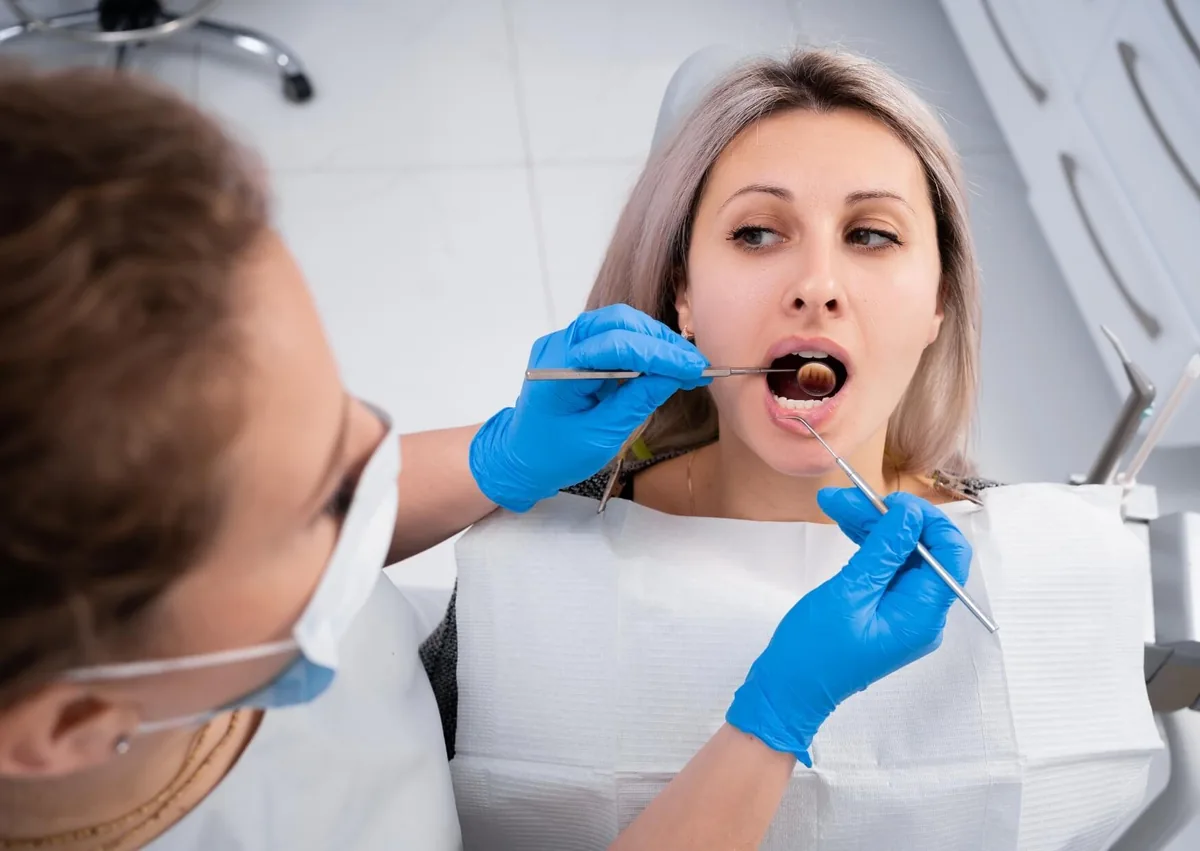
Arrange an evaluation if a mouth sore lasts longer than two weeks, keeps returning, becomes unusually large, worsens, or interferes with eating, drinking, speaking, or sleep.
Care is also appropriate for multiple sores, sores that extend onto the lips, or symptoms that do not resemble your usual canker sores. If you suspect an abscess, review our dental abscess self-care.
For recurring or persistent sores, a dentist can offer preventive dental care to identify triggers, treat appliance or tooth irritation, and suggest topical or prescription options to control pain and reduce future outbreaks.
Seek prompt medical care for fever, spreading redness, facial or neck swelling, pus, severe weakness, or signs of dehydration such as very little urination or dizziness. Difficulty breathing or swallowing requires emergency care.
A dentist can check for sharp teeth, appliance irritation, infection, oral cancer, and other conditions that may look like a canker sore. Persistent or unclear ulcers should not be self-diagnosed, especially if there is a firm lump, bleeding, numbness, unexplained weight loss, or a history of tobacco use.
If sores persist, grow, or recur often, arranging an exam lets a dentist check for sharp teeth, appliance irritation, or nutritional deficiencies and start targeted treatment to relieve pain. Call Smile Line Dentistry for preventive dental care in Livermore, CA at (925) 456-7600 to schedule an appointment or ask about same-day availability.
Pain may improve within three days, but the visible sore usually takes 7 to 14 days to close completely. A very small sore may resolve sooner.
A canker sore may enlarge during the first few days, especially if it keeps getting irritated by food, a tooth, or an appliance. Continued growth, severe pain, or no healing after two weeks should be examined.
No. Typical canker sores are not caused by herpes and cannot be spread through kissing, shared utensils, or other contact.
No. A canker sore is an ulcer, not a fluid-filled bump, so trying to pop it can injure the tissue and increase pain.
Yes, children and teenagers can get canker sores. A child should receive medical or dental care or see a pediatric dentistry clinician if pain prevents drinking, sores are frequent or extensive, or fever and other signs of illness occur.
We are proud to provide our patients with the best in dental technology, treatment options and patient comfort. It is our pleasure to address all your questions and concerns.
