
Full mouth dental implants typically cost about $20,000 to $90,000 or more for both arches in the United States. The total depends on the type of restoration, the number of implants, whether you need extractions or grafting, the materials used, and what the quoted fee actually includes.
An accurate quote usually requires an exam and 3D imaging. Low advertised starting prices may leave out scans, temporary teeth, sedation, preparatory treatment, or the final prosthesis. For a broader overview, see cost of dental implants.
Dental implants can restore chewing function, speech, and confidence with a durable solution tailored to your anatomy. Smile Line Dentistry in Livermore, CA, helps patients understand implant options and expected outcomes so you can make a well-informed decision.
A full-arch implant restoration often costs about $10,000 to $45,000 or more per arch. Removable implant overdentures are usually at the lower end, while fixed bridges made with premium materials are often at the higher end.
These are broad planning ranges, not guaranteed fees. Complex treatment, regional pricing, and clinician experience can push the total higher.
|
Full-Mouth Option |
General Cost Pattern |
Key Distinction |
|---|---|---|
|
Removable implant overdenture |
Usually lowest |
Snaps onto implants but must be removed for cleaning |
|
Fixed full-arch bridge |
Usually higher |
Stays attached and is removed only by a dental professional |
|
Individual implant-supported bridges and crowns |
Often highest |
Uses more implants and separate restorations |
|
Conventional dentures |
Much lower initial cost |
No implants; stability and chewing ability may be more limited |
“Full mouth dental implants” does not usually mean one implant for every missing tooth. Many full-arch systems use four to six implants per arch, although the right number depends on bone support, bite forces, and the treatment design.
The biggest cost drivers are the number of implants and the type of prosthesis. Acrylic restorations may cost less at first, while zirconia and other stronger materials often increase the fee.
Bone support also matters. If you need grafting, sinus augmentation, gum disease treatment, or tooth extractions, both the cost and treatment time can increase.
Other factors that often affect the total include:
A written quote should also explain what happens if an implant does not integrate or if a temporary restoration breaks. It should clearly state whether future maintenance, professional removal and cleaning, or repairs are billed separately.
Full-mouth treatment is usually completed in stages. The process may include consultation and imaging, removal of damaged teeth, implant placement, healing, and delivery of the final teeth.
Some patients can receive temporary fixed teeth on the day of surgery. These same-day teeth are usually temporary, and candidacy depends on implant stability, bone quality, bite forces, and overall health.
|
Treatment Stage |
Often Included or Billed Separately |
|---|---|
|
Examination and 3D scan |
May be separate |
|
Extractions and bone grafting |
Frequently separate |
|
Implant surgery |
Usually a core part of the quote |
|
Sedation |
Often separate |
|
Temporary prosthesis |
Varies by quote |
|
Final bridge or overdenture |
Should be clearly specified |
|
Follow-up and maintenance |
Coverage varies |
Ask for an itemized estimate. It should list the implant count, restoration material, temporary-teeth plan, and final-prosthesis fee so you can compare complete treatment plans instead of just advertised starting prices.
Dental insurance may help with exams, extractions, grafting, or the prosthesis, but many plans limit or exclude implant coverage. Medical insurance sometimes contributes when tooth loss is tied to qualifying trauma, tumors, or certain medical conditions, though approval is not automatic. For more detail, see dental insurance coverage.
Ask your dental office to submit a pretreatment estimate before you begin. Financing, health savings accounts, and flexible spending accounts may also help, but it is important to review interest rates, deferred-interest terms, and total repayment costs.
A lower fee is not always the better value. Confirm who performs the surgery and restoration, what implant system is used, how complications are handled, and what long-term maintenance will cost.
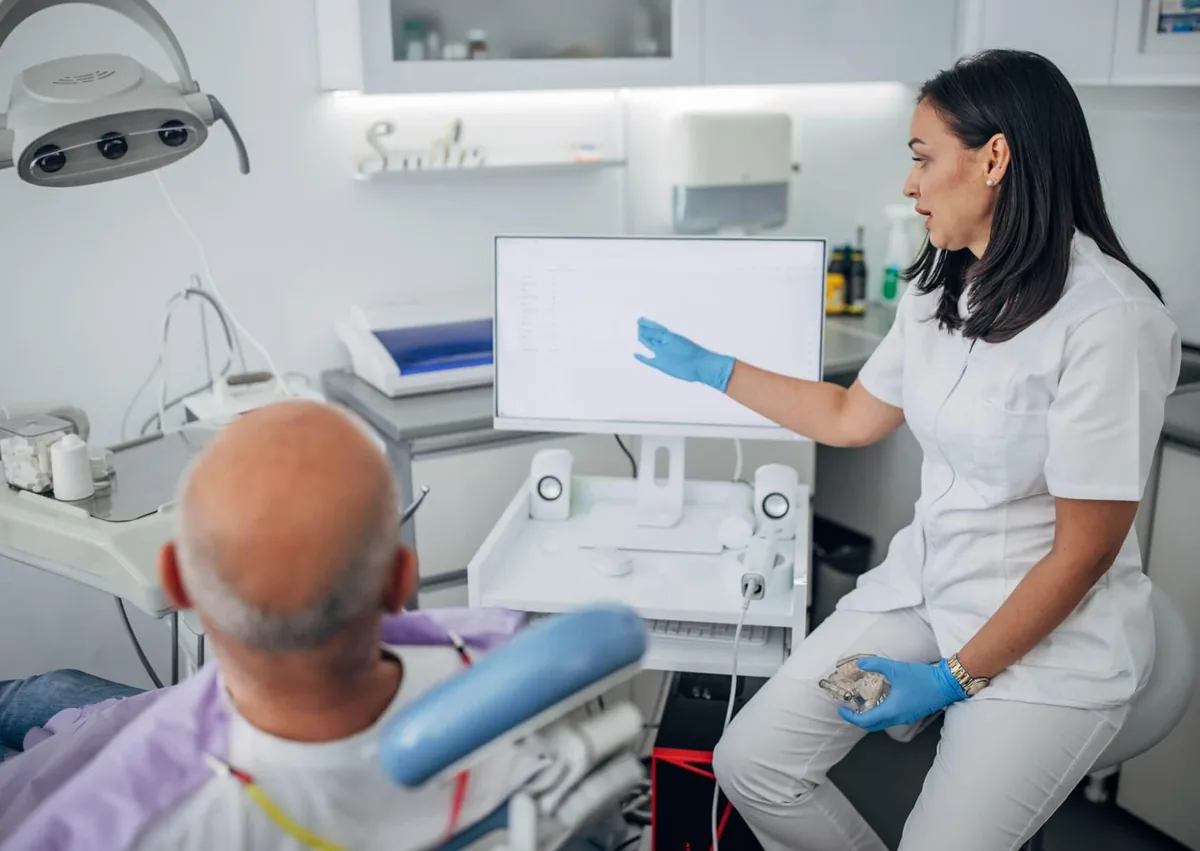
Treatment often takes several months because implants usually need time to fuse with bone. Cases that involve grafting or staged surgery can take longer, while selected patients may receive implants and temporary teeth in one visit. For a fuller timeline, see how long implants take.
Swelling, bruising, soreness, and temporary diet changes are common after surgery. Smoking and nicotine use can interfere with healing and raise the risk of implant problems.
Implants do not get cavities, but the surrounding gum and bone can still become inflamed or infected. Daily cleaning, regular maintenance visits, and management of teeth grinding all help protect the result.
Schedule an implant evaluation if missing or failing teeth affect chewing, comfort, speech, or denture stability. A dentist can review your bone support, gum health, medical history, alternatives, and expected maintenance needs. If you are unsure about candidacy, learn when it's too late.
After implant surgery, contact the treating office for worsening pain or swelling, persistent bleeding, pus, fever, a loose implant or bridge, an altered bite, or numbness that persists or worsens. Seek urgent medical care for trouble breathing or swallowing, rapidly spreading facial or neck swelling, uncontrolled bleeding, or other severe symptoms.
A comprehensive evaluation is especially important if you have uncontrolled diabetes, active gum disease, major bone loss, immune-system conditions, or medications that affect bone healing. A clear diagnosis and itemized plan make it easier to compare costs, benefits, risks, alternatives, and long-term responsibilities.
To get a personalized cost estimate and treatment plan, arrange a consultation that includes an exam and 3D imaging so clinicians can evaluate bone, teeth, and options. Smile Line Dentistry offers dental implant consultations in Livermore, CA; call (925) 456-7600 to schedule or ask about same-day availability.
A fixed full-mouth restoration often uses four to six implants per arch, but some cases need more or fewer. Bone anatomy, bite forces, prosthesis design, and implant position all affect the plan.
Coverage is often limited. A dental plan may help with selected procedures or the prosthesis, but exclusions, waiting periods, deductibles, and annual maximums can still leave a large out-of-pocket balance.
Usually, yes. Full-arch bridges can replace an entire row of teeth with fewer implants, while separate bridges and crowns usually require more surgery, more components, and higher lab costs.
Implants can function for many years, but no restoration has a guaranteed lifespan. Gum health, bone support, hygiene, smoking, grinding, health conditions, maintenance, and restoration material all affect longevity, and the attached teeth may eventually need repair or replacement. Read more about how long implants last.
Usually not. A reliable quote requires an exam, imaging, a health review, and decisions about extractions, grafting, implant count, sedation, temporary teeth, and final materials.
We are proud to provide our patients with the best in dental technology, treatment options and patient comfort. It is our pleasure to address all your questions and concerns.
